Location preference

Enter your country so we can show you products that are available for you.

Insights

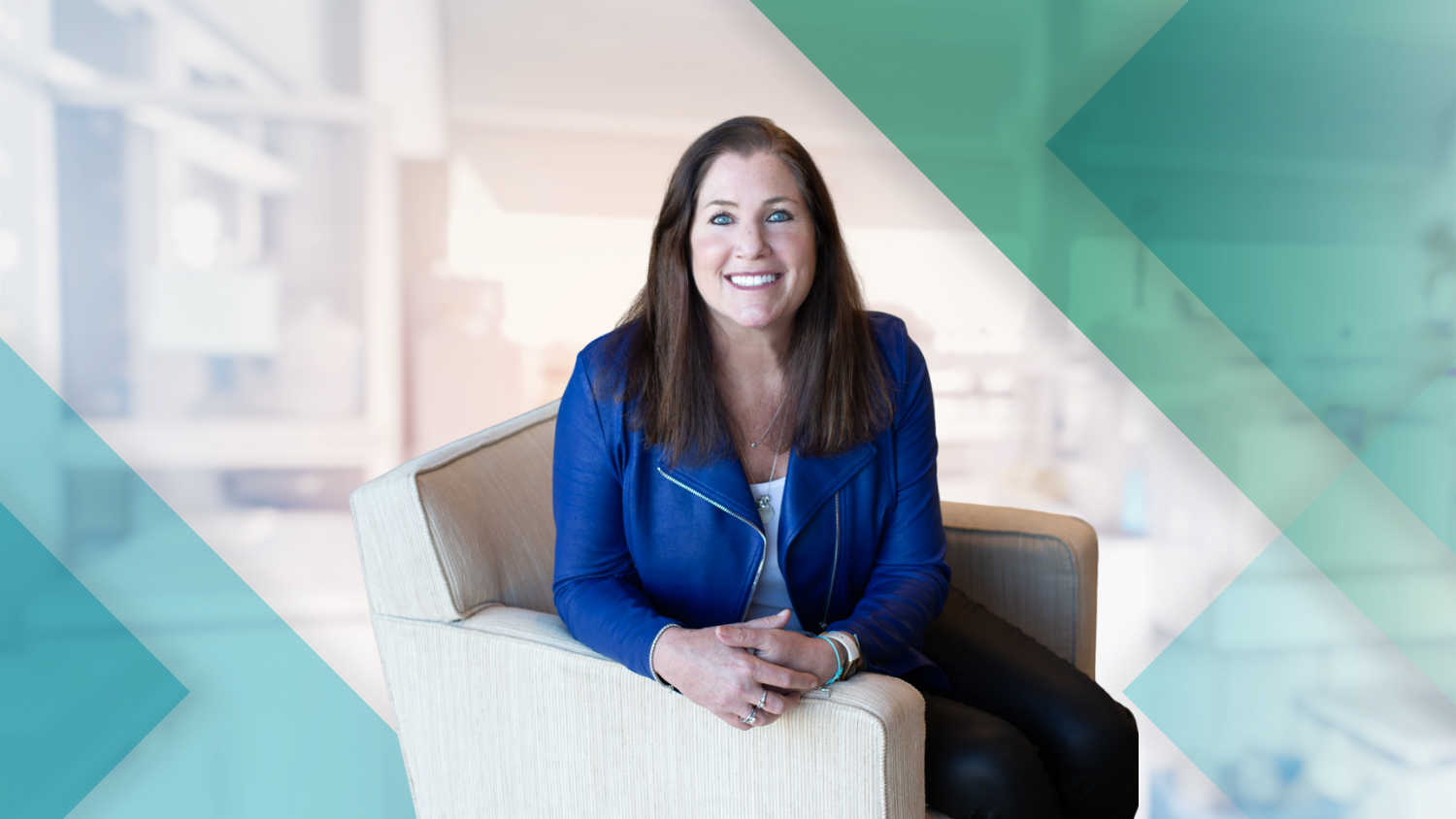
On Rare Disease Day, Terumo BCT’s Global Head of R&D shares how her own diagnosis shapes her commitment to advancing lifesaving innovation


When Jackie Kunzler hemorrhaged at 30,000 feet, she didn’t know if she would survive the flight home. A routine work trip had spiraled into a life-threatening emergency — one she could no longer hide as the blood drained away from her. As clinicians prepared for the worst, Jackie faced a reality she’d spent years managing but never fully confronted: the fragile line between stability and crisis for people living with rare bleeding disorders.

What she didn’t know yet was that the same condition endangering her life would become the driving force behind the scientific mission she leads today — advancing global research and development for Terumo Blood and Cell Technologies (Terumo BCT) to improve health outcomes for patients globally.

“I’m very lucky to be alive,” she says. “And very grateful to be able to serve patients because I know exactly what it feels like to be one.”


An unexpected diagnosis

Jackie’s journey with pseudo-von Willebrand disease began long before she knew its name. After delivering her first child, she hemorrhaged so severely it took two days for clinicians to control the bleeding. That crisis triggered a series of tests and a diagnosis she never could have anticipated.

“If I hadn’t had a baby, I’m not sure I would have ever known,” she says.

Pseudo-von Willebrand disease — a rare, often misdiagnosed platelet-type disorder1 — meant Jackie’s blood would not clot normally. Her platelet count was always low. Her bleeding time never stopped within the standard window. A simple cut could bleed for 15 minutes or more.

For 12 years, an inhaled medication (DDAVP) helped control the bleeding. But when the drug began causing headaches — one of many potential serious side effects — she made the difficult decision to stop. She managed without it until that day in the sky when the condition caught up with her.


A life-threatening turning point

On a flight home from Puerto Rico, Jackie’s bleeding intensified rapidly. She tried to shield her colleagues from what was happening, but eventually, it became impossible to conceal.

Upon landing, Jackie went straight to the hospital. A team of specialists worked for two days to stabilize her before performing an emergency hysterectomy. Blood units were prepared in case she bled out on the operating table.

The experience left her shaken, but alive. And it provided her with a perspective few scientists gain firsthand.

“You realize how different it is to live every day with a rare disease and desperately want a cure,” she says. “It gives you urgency. And empathy.”


A mission made personal

Long before her diagnosis, Jackie was drawn to hematology. She began as a medical technologist in clinical chemistry and blood sciences — work that has now come full circle.

Today, as Senior Vice President and Global Head of R&D at Terumo Blood and Cell Technologies, Jackie leads a global team of 500 associates driving innovations that help blood centers, hospitals, researchers, and clinicians collect and prepare blood and cells to help treat challenging diseases and conditions.

“For me and my team, it’s not about the next product,” she says. “It’s about the next breakthrough that changes someone’s life.”


Why Rare Disease Day matters — and why awareness saves lives

For Jackie, Rare Disease Day is more than a symbolic moment. It’s a reminder of how many people still struggle for answers — and how much scientific progress depends on visibility.

Looking back, she wonders whether her grandmother — who raised her — suffered from the same disorder. She died from a hemorrhage in 1982 after a nosebleed doctors couldn’t stop. “A question science couldn’t answer then,” Jackie says, “but might today.”

Her message for others living with a rare disease is simple: “Never give up. Join registries. Connect with others. Researchers are working every day to find the answers you need.”

Through her work, Jackie is one of them — living proof of how far science has come, and a champion for ensuring more patients receive the answers her grandmother never could.


Disclaimer: The story shared here reflects one individual’s personal experience. It is not medical advice and should not be used to diagnose or treat any condition. The individual is a Terumo Blood and Cell Technologies (TBCT) employee and appears in an employee capacity. No TBCT product or indication is promoted or implied. For medical questions, please consult a qualified healthcare professional.


1. Othman M. Platelet-type von Willebrand disease: a rare, often misdiagnosed and underdiagnosed bleeding disorder. Semin Thromb Hemost. 2011;37(5):464-469. doi:10.1055/s-0031-1281030

To top