Location preference

Enter your country so we can show you products that are available for you.

News Release

Healthcare’s most overlooked contributors

By Chetan Makam

There’s a line from a poem I often come back to:

“Lives of great men all remind us,
We can make our lives sublime,
And, departing, leave behind us
Footprints on the sands of time.”
— Henry Wadsworth Longfellow


I think about this when I think about blood donors — the millions of people around the world who quietly make an impact without recognition.

In healthcare, we often celebrate innovation: new therapies, technologies, and scientific breakthroughs. And we should. Progress matters. But some of the most essential contributions are the ones we rarely see.

Blood donations are among them.

At Terumo Blood and Cell Technologies, we often say that blood is essential medicine. It can’t be manufactured or scaled on demand. Every transfusion begins with someone making the decision to help another person.

Over time, this has become deeply personal to me. Since the need for blood is constant, I’ve started to see everyday moments — at conferences, in meetings, even in passing — as opportunities to raise awareness. I remember a global leadership seminar with hundreds of executives. When it was my turn to speak, I paused and said, “Before I begin, I hope many of you are blood donors. And if you’re not, I hope you’ll consider becoming one or encouraging someone else to.”

The reaction was immediate and very positive. It reinforced something I’ve come to believe strongly: often, the barrier isn’t awareness, it’s activation. Sometimes, all it takes is an invitation.

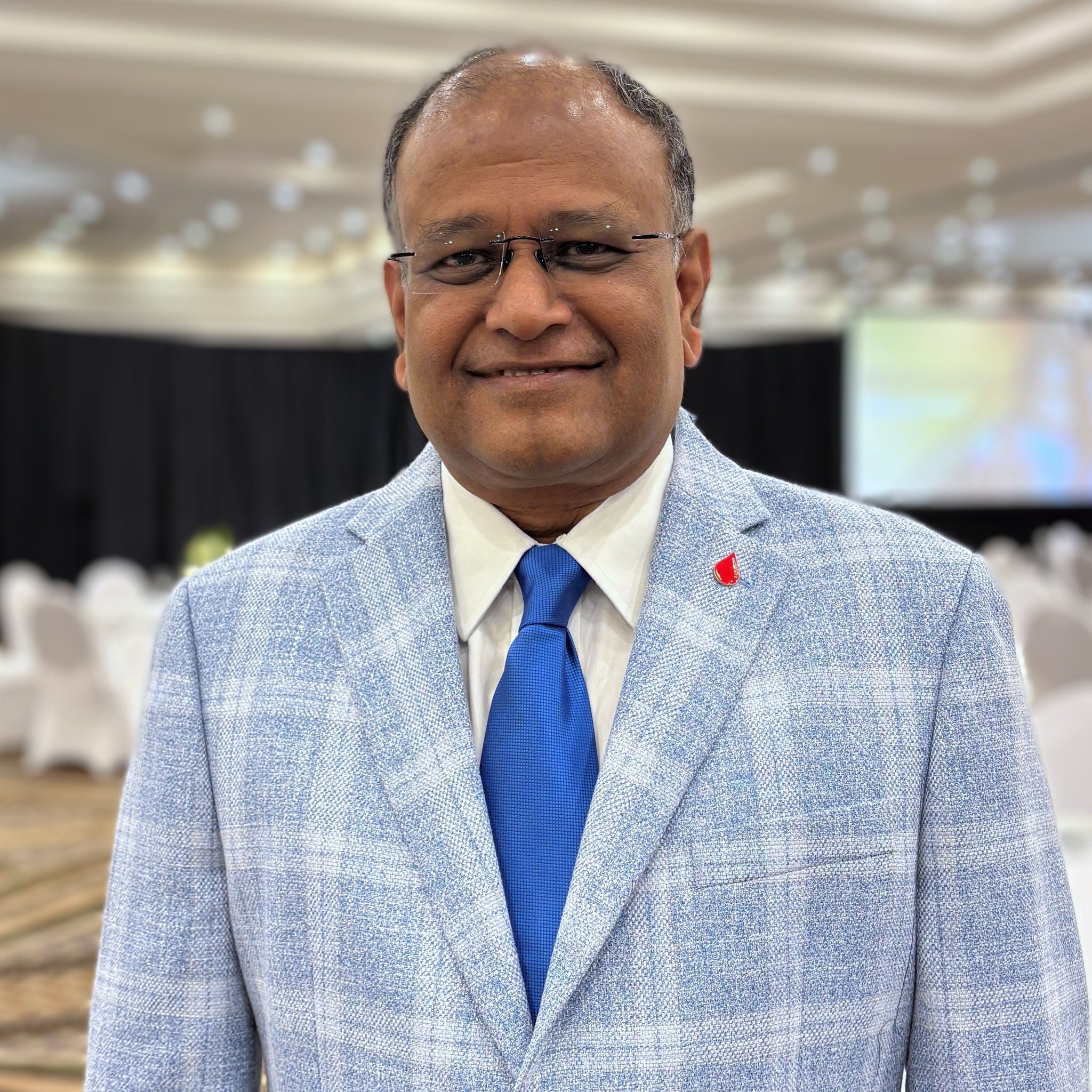
That’s why I wear a small red blood-drop pin on my blazer. It’s a simple conversation starter — with colleagues, with strangers, even at 30,000 feet. It creates a moment to talk about something fundamental, but often overlooked. Most people don’t think about blood donation until they need it.

In some parts of the world, access is uncertain. I’ve experienced this personally through late-night calls from family members in India trying to find blood for someone in need. In those moments, the scarcity of resources becomes very real. In more established systems, such as in the U.S. and parts of Europe, blood is often available, and the process appears seamless. But that depends on people continuing to show up.

Even established systems don’t work equally everywhere. Rural communities face persistent access challenges. Even in strong systems, the balance between supply and demand is delicate.

What we often describe as a “system” is really an ecosystem: donors, collection, testing, processing, logistics, and clinical care. From the outside, it may appear coordinated and reliable, but every step matters. Without the first step — the donor — many modern medical treatments wouldn’t be possible.

Early in my career, I worked with a hospital team treating a critically ill patient. Our role was small but meaningful. We provided diagnostic insight that helped guide treatment, which ultimately helped save the patient’s life. As we were leaving, my colleague said, “This is why we do the work that we do.” The patient’s family would never know we were involved, and that was the point. What mattered was the outcome.

So much of healthcare works this way. Quietly. Without recognition.

The same is true for blood donors. Most will never meet the people they help. They won’t see the surgeries that move forward, the trauma patients who survive, or the treatments that continue. But their decision makes all of it possible.

As healthcare systems face increasing pressure — from aging populations, workforce shortages, and rising demand — innovation will be critical. But innovation alone isn’t enough.

We also need to recognize and sustain the human behaviors that make care possible at scale. Yes, awareness matters. But participation is what sustains the system.

Behind every successful transfusion is not just infrastructure or technology, but a person who chose to act. And in many ways, that human choice is the most important infrastructure in healthcare.


Chetan Makam is General Manager of Global Blood Solutions at Terumo Blood and Cell Technologies.

Every two seconds, someone needs blood, yet access remains uneven globally. Headquartered in Lakewood, Colorado, Terumo Blood and Cell Technologies is a global medical technology company committed to supporting a strong, sustainable blood supply by working alongside blood centers, governments, healthcare providers, and partners to help ensure patients have access to lifesaving blood when they need it.

To top