Location preference

Enter your country so we can show you products that are available for you.

Access Point

Every stem cell therapy starts with a stem cell collection. The quality of that starting material is critical to therapy development and outcomes for patients dealing with certain cancers and other diseases. That’s why the Spectra Optia Apheresis System offers two stem cell collection protocols: dual-stage mononuclear cell collection (MNC) and continuous mononuclear cell collection (CMNC).

Both procedures collect critical cell populations, such as lymphocytes and monocytes, but they differ in their workflow and automation process. Let’s take a closer look at how they run on Spectra Optia.

How the MNC procedure works

This dual-stage separation process is ideal for patients with a low total blood volume (TBV), thanks to its maximum extracorporeal volume (ECV) of 191 mL. It uses the Spectra Optia Collection Set (with the teal and white cover) and the standard filler.

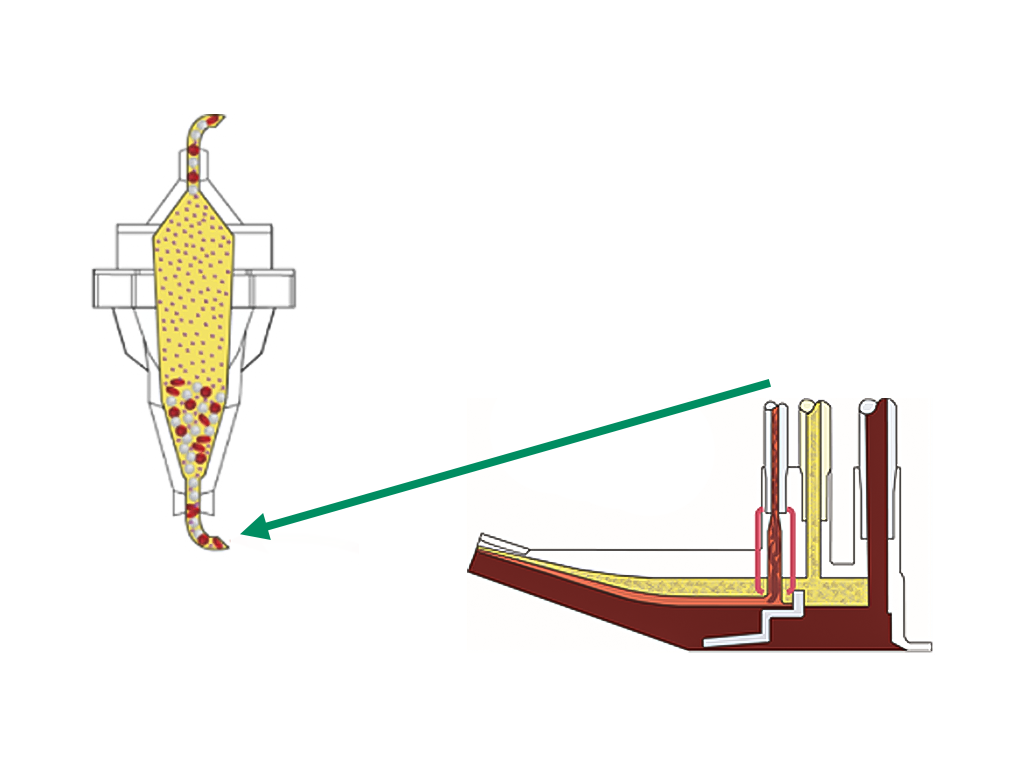
During the procedure, whole blood enters the channel in the centrifuge and separates into packed red blood cells (RBCs), plasma, and a buffy coat layer (containing platelets and white blood cells). The buffy coat is then pumped into the chamber for a second stage of separation, where platelets are separated from target cells and returned to the patient or donor.

Once the chamber is full, the collect valve shifts to the collect position, flushing the cells into the collection bag. The system repeats this cycle until the run targets are achieved.


Figure 1. Collection Set chamber (left) and connector (right)


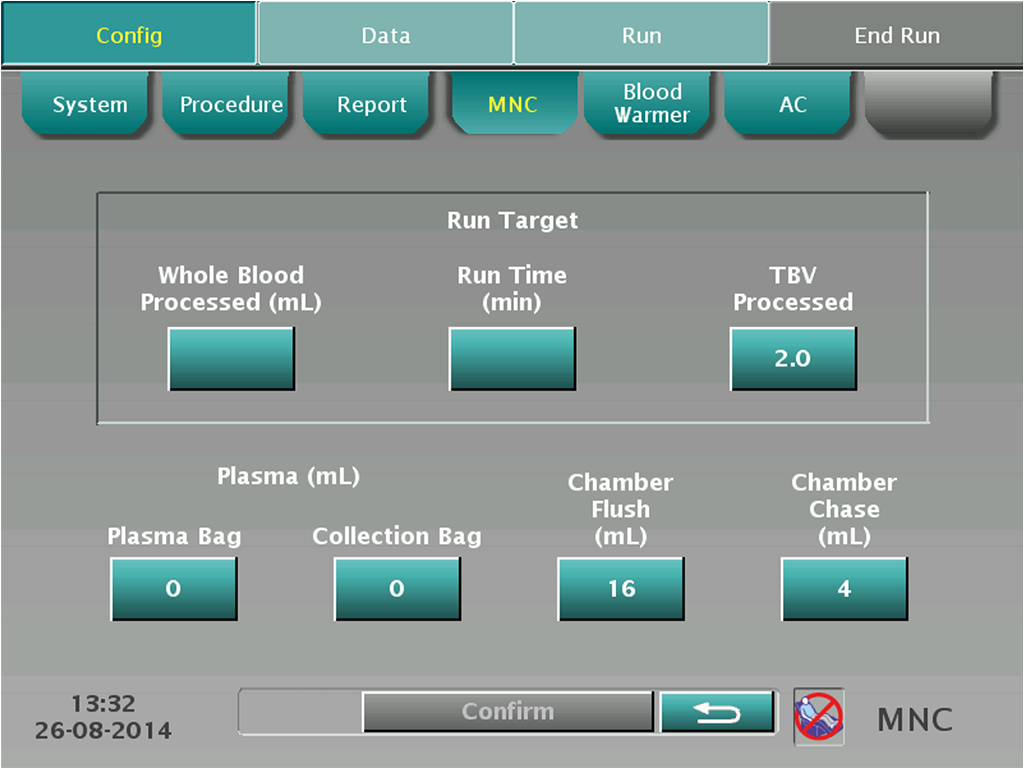
Figure 2. MNC procedure run targets


How a CMNC procedure works

This procedure is ideal for those who need an automated, yet familiar and flexible, method of collecting cells. It uses the Spectra OptiaIDL Set (with the purple and white cover) and the IDL filler. As the name implies, CMNC uses a continuous-flow method for collection.

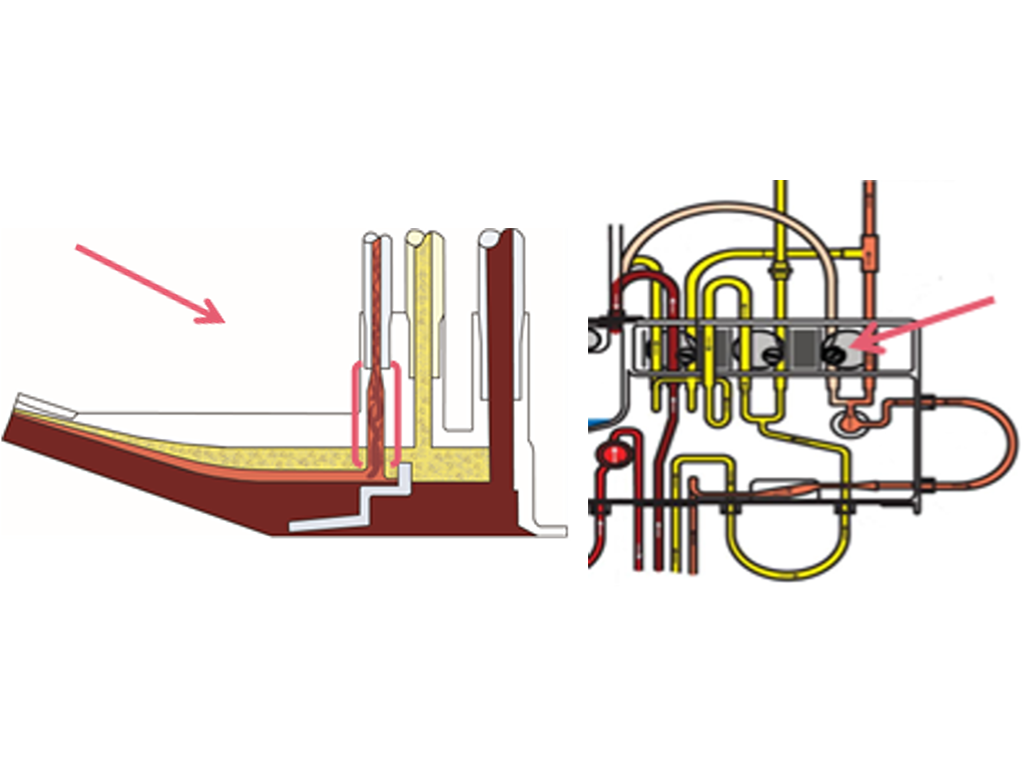
During this procedure, the Automated Interface Management (AIM) System monitors the collect port. Once the mononuclear cells are detected by the AIM system, Spectra Optia moves the collect valve to the collect position.

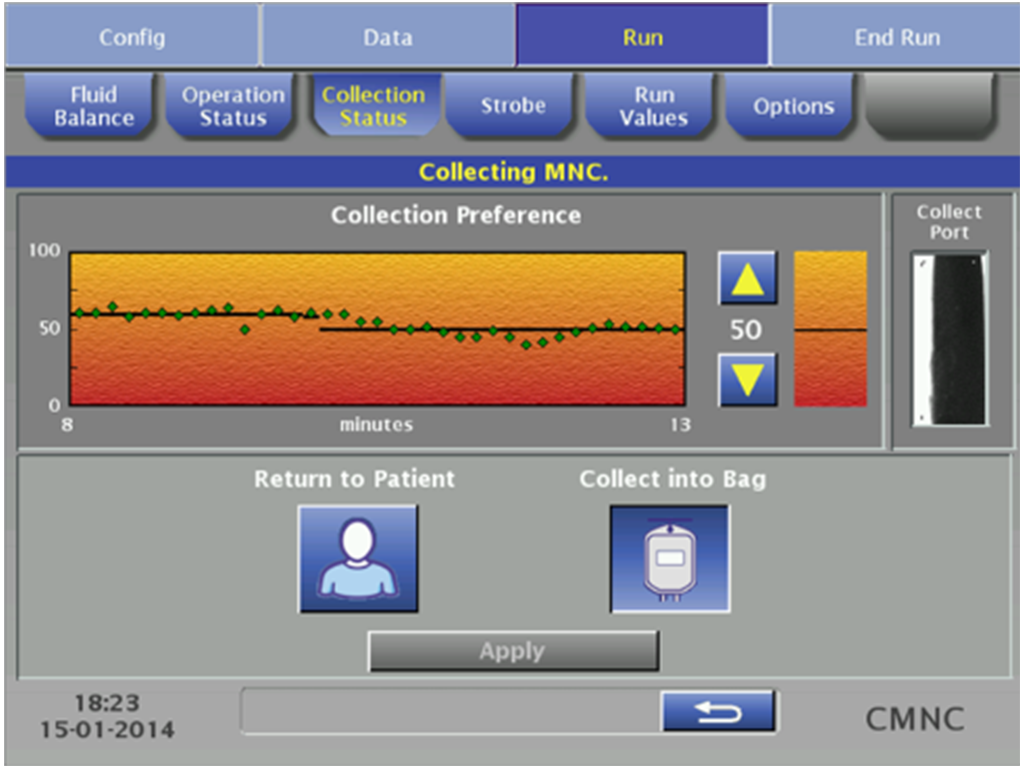
The valve remains in the collect position until the run targets are met. The concentration of cells in the collect port can be adjusted with the collection preference setting.


Figure 3. IDL Set connector (left) and collect valve in collect position (right)


Figure 4. CMNC Collection Preference interface

 
At a glance: MNC versus CMNC


MNC protocol

CMNC protocol

Packing factor      

Hard (fast) spin

Soft (slow) spin

ECV minimum to maximum

147 to 191 mL

253 to 297 mL

Inlet flow rate

10 to 125 mL/min

5 to 142 mL/min

Collection preference

20 to 80

10 to 90


More ways to optimize patient care

MNC and CMNC are just two of the nine protocols you can perform on Spectra Optia. To learn more about any of these protocols and get other insights to help optimize your Spectra Optia use to support the best patient care, visit us online or contact a Terumo Blood and Cell Technologies apheresis specialist.

Sources:

Terumo Blood and Cell Technologies. Spectra Optia Apheresis System Operator’s Manual. Part no. 1000036875. August 2023.

Terumo Blood and Cell Technologies. Mononuclear Cell Collection (MNC) Procedure Training – Version 12, Instructor Handbook. 2025. TS-OPTI-02005.

Terumo Blood and Cell Technologies. Continuous Mononuclear Cell Collection (CMNC) Procedure Training – Version 12, Instructor Handbook. 2025. TS-OPTI-01966.

Terumo Blood and Cell Technologies. Continuous Mononuclear Cell Collection (version 12.1.1 CMNC) Procedure Training. 2025. TS-OPTI-00124.

Terumo Blood and Cell Technologies. Spectra Optia Apheresis System Mononuclear Cell Collection (v12.1.1 MNC) Procedure Training. 2025. TS-OPTI-00123.

Terumo Blood and Cell Technologies. Lau TT. MNC and CMNC — comparisons and procedural considerations. 2020. TS-OPTI-01875.

To top