Location preference

Enter your country so we can show you products that are available for you.

Access Point BCP

In this special section, we’re shining a spotlight on the second U.S. adopter of the Reveos™ Automated Blood Processing System. Founded in 1960 and headquartered in New Orleans, The Blood Center is the primary supplier of blood, blood components, and plasma derivatives to more than 50 hospitals and numerous outpatient transfusion facilities in southeast Louisiana and southern Mississippi.

Starting with manual processing

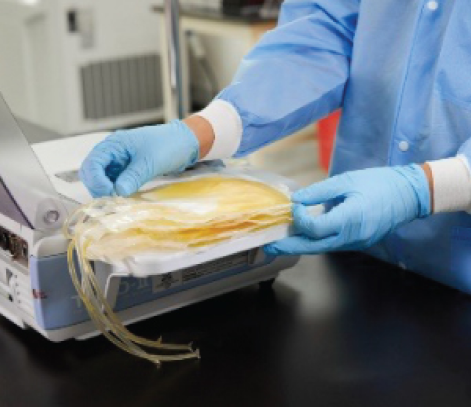
The Blood Center supplies both apheresis and whole blood-derived platelets (WBDPs) to its customers. The Blood Center previously relied on a multi-step manual process to produce WBDPs. Manual processing introduced variability in yields and quality, required significant technician oversight, and consumed valuable staff time.

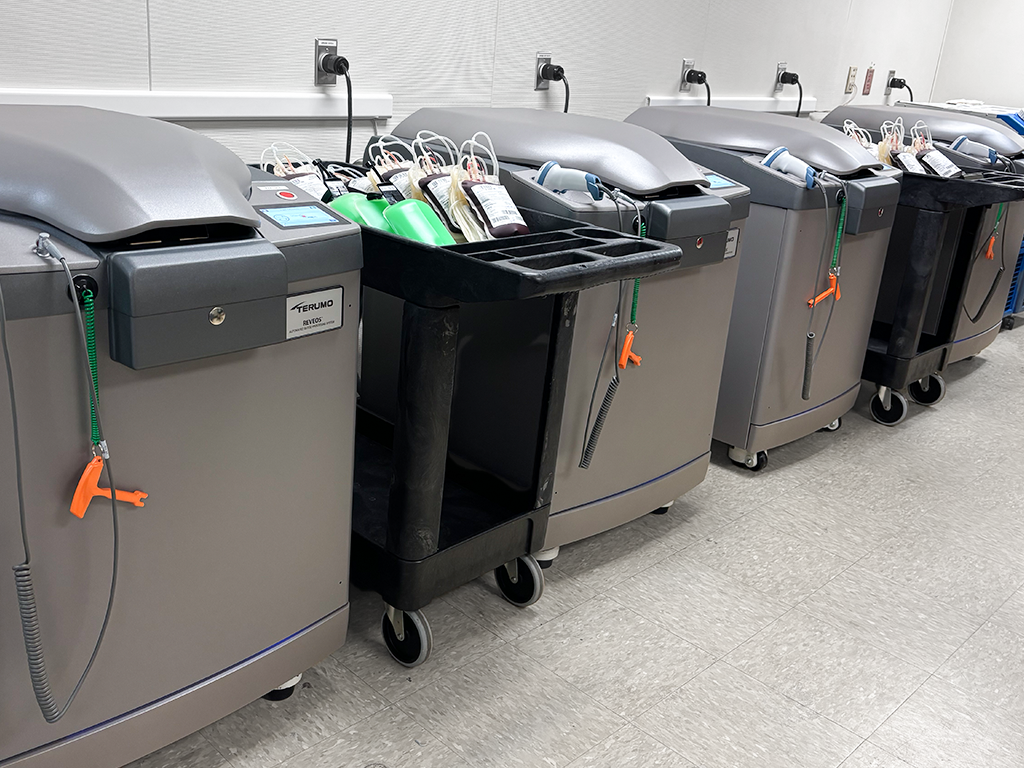
In January 2025, after several months of planning and preparing for this new technology, The Blood Center received and implemented four Reveos devices. While they continue to produce some WBDPs through the manual process, they are also using the Reveos automated process and plan to eventually transition fully to automated WBDPs.

“This is a milestone moment for our center,” said Mickie Wilson-Martin, Production and Distribution Manager at The Blood Center. “We’ve waited a long time for a solution like this — one that truly modernizes how we manage whole blood. Being among the first in the U.S. to implement Reveos is something we’re incredibly proud of, and it sends a powerful message as we work to attract younger talent. We may be small, but we are mighty, and we’re here for our community.”

Revolutionizing platelet production through automation

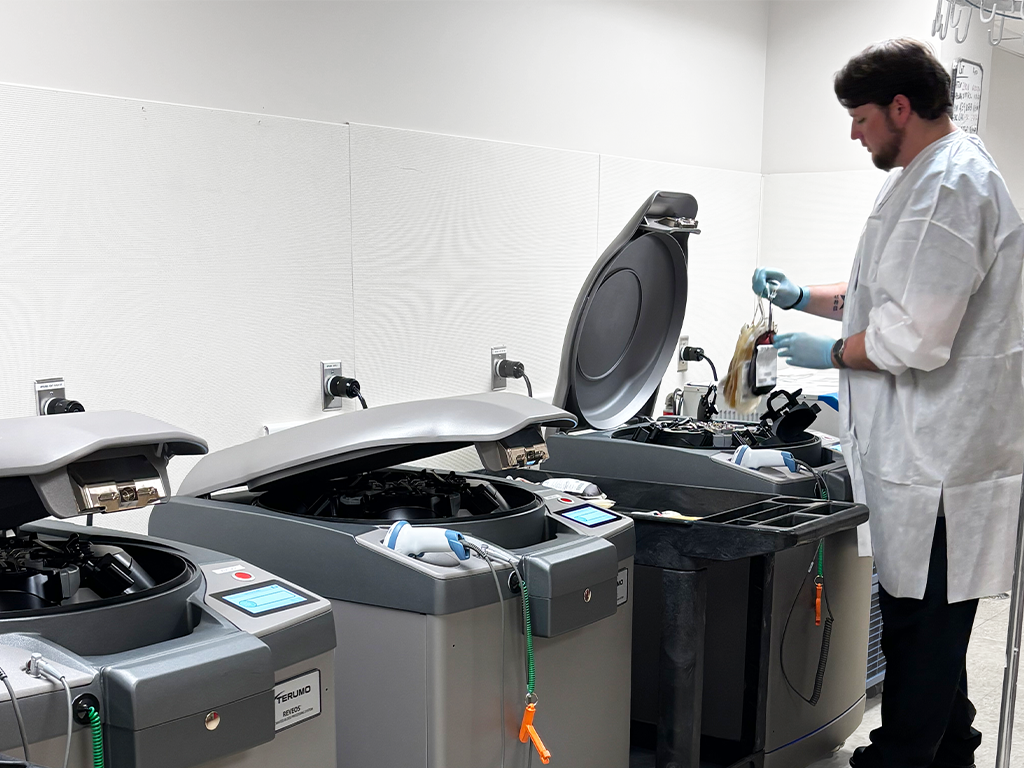
With Reveos, the complex steps of balancing, centrifuging, expressing, sealing, and transferring data are seamlessly integrated into a single, streamlined workflow by consistently processing whole blood into components in an average of 25 minutes. Reveos has not only elevated the way blood is processed, but also redefined how platelets are produced.

This innovation comes at a critical time. Blood centers are under growing pressure as platelet shortages, staffing limitations, and an aging donor population strain the system. Nearly 98% of the U.S. platelet supply is currently collected through apheresis — an intensive process in which platelets are drawn directly from a single donor using specialized equipment during a lengthy procedure. Until now, apheresis has been the dominant method for platelet collection in the U.S. The use of Reveos is helping expand the supply of platelets.

Production and Distribution Technician Tyler Poirrier explained, “Reveos definitely makes the whole platelet process a lot faster and easier, especially because of the yields that the machine gives us. It shortens my visual inspection from having to manually check and sort every single one of them.”


Early wins and operational impact

Since implementing Reveos, The Blood Center has already seen measurable improvements, including increased platelet inventory — with up to 100 pooled platelet products manufactured per month — increasing availability for the more than 50 hospitals they serve.*

Other areas seeing improvement:

  • Reduced hands-on time, allowing staff to focus on other critical tasks and projects 
  • Improved product consistency, resulting in a more reliable platelet supply with equivalent therapeutic doses 
  • Reduced platelet waste due to lower expiration rates with a seven-day platelet shelf life

“It’s not just faster — it’s more predictable,” noted Wilson-Martin. “You gain control over your workflow, which is critical in a field where every drop counts.”

Community impact and looking ahead

The investment in automation extends far beyond the lab. Faster, more reliable processing strengthens the entire blood supply chain, equipping hospitals to respond more effectively to both routine needs and emergencies.

Wilson-Martin added, “We can breathe a little easier now, since we’re no longer worrying about whether we’ll have the platelets we need tomorrow. It’s a meaningful step forward in strengthening the blood supply infrastructure for our communities.”

Ultimately, the success of this technology depends on the support of blood centers and their lab processing staff, whose expertise and dedication are incredibly valuable in turning innovation into lifesaving impact.

*Data provided by The Blood Center.

To top